Currency Trading Platforms
Myfintec Net's expert analysis deciphers the complexities of currency trading platforms, guiding users to select the optimal solution for their specific trading needs and risk tolerance. This practical guide provides clear insights into essential features, regulatory importance, cost structures, and risk management tools.
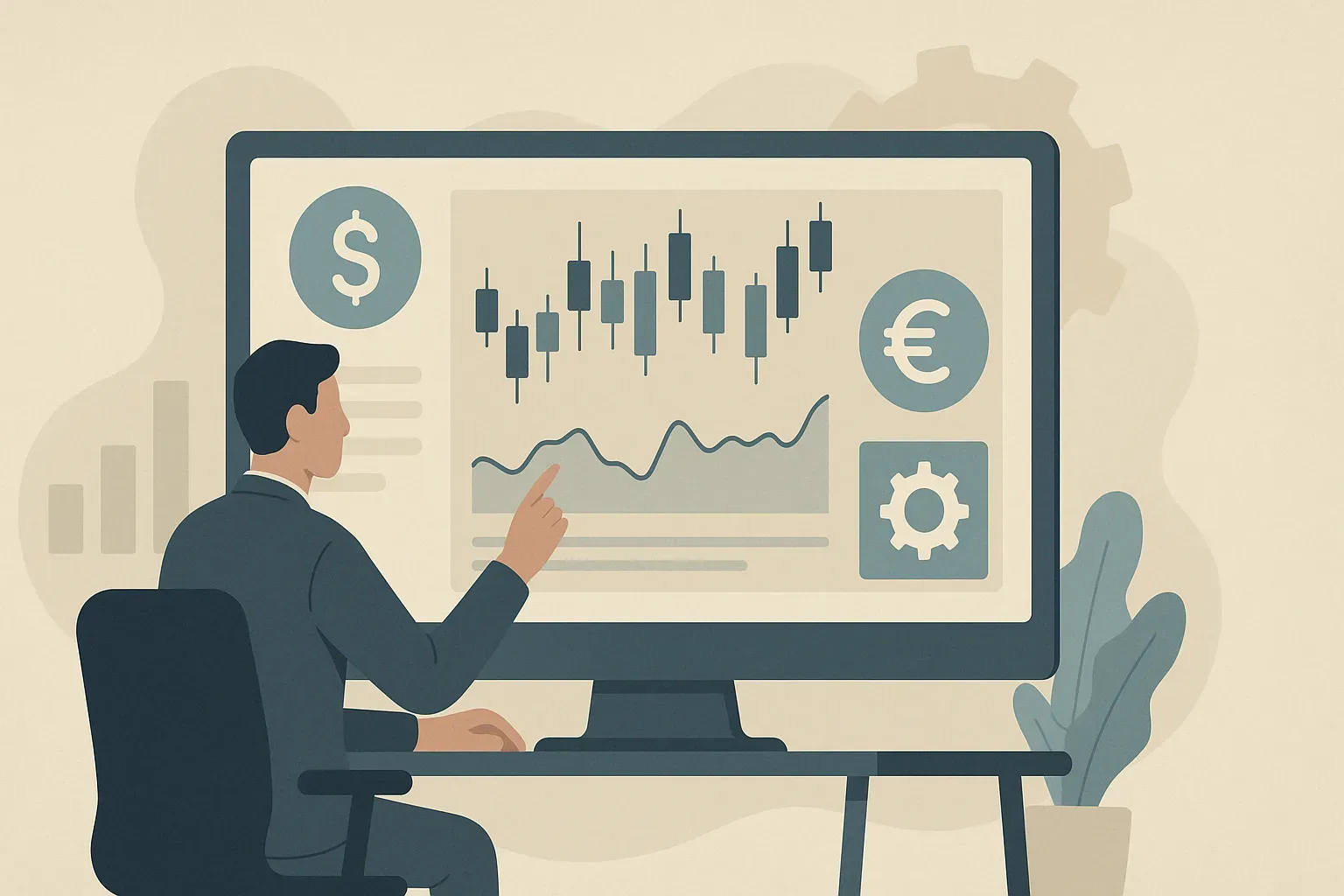
Research note: flagged for leverage risk, market volatility, platform fees, regulation risk. Myfintec does not endorse these statements, does not promise profit or safety, and has not verified them. Treat any forecast, return figure or safety claim below as unsupported text.
Myfintec Net’s expert analysis is dedicated to deciphering the complexities of currency trading platforms, guiding users to select the optimal solution for their specific trading needs and risk tolerance. The foreign exchange market, or forex, is the largest and most liquid financial market globally, operating 24 hours a day, five days a week. It is a market where currencies are traded, allowing participants to speculate on currency price movements. At the heart of accessing this dynamic market are currency trading platforms, digital gateways that connect traders to brokers and the broader forex ecosystem.
Understanding Currency Trading Platforms: The Basics involves recognizing them as specialized software interfaces provided by forex brokers. These platforms allow individuals and institutions to execute trades, monitor real-time prices, analyze market data, and manage their trading accounts. A reliable currency trading platform is defined by several key characteristics: robust security measures, consistent uptime, fast and accurate execution of trades, transparent fee structures, comprehensive regulatory compliance, and responsive customer support. Such a platform functions by aggregating price feeds from various liquidity providers, presenting these prices to traders, and then processing buy or sell orders. When a trader places an order, the platform routes it to the broker, who then executes it in the interbank market or with their own liquidity pool. This process often happens within milliseconds, providing traders with near-instant market access.
Platforms should support diverse order types beyond basic market orders, including limit orders, stop-loss orders, take-profit orders, and conditional orders like One-Cancels-the-Other (OCO). Traders should prioritize platforms that offer consistent performance, low latency, and minimal slippage during trade execution.
Web-based platforms are generally the simplest, requiring no downloads and offering basic functionality suitable for beginners or casual traders. Desktop platforms, such as the widely popular MetaTrader 4 (MT4) and MetaTrader 5 (MT5), or proprietary platforms like cTrader, offer more advanced charting, customization options, and support for algorithmic trading through Expert Advisors (EAs). These are typically preferred by intermediate and experienced traders. Mobile applications provide convenience for monitoring and managing trades but may lack the full analytical depth of their desktop counterparts. To identify a platform that aligns with one's experience level and trading objectives, a beginner might seek platforms with extensive educational materials, demo accounts for practice, and a streamlined interface. Intermediate traders might look for more advanced indicators, customizable layouts, and the ability to backtest strategies. Professional traders often demand ultra-low latency execution, API access for developing custom trading solutions, and sophisticated analytical tools. Considerations should include available capital, time commitment to trading, risk appetite, preferred currency pairs or assets, and whether one intends to use automated strategies.
Reputable platforms are overseen by stringent regulatory bodies in major financial jurisdictions, such as the Financial Conduct Authority (FCA) in the UK, the Cyprus Securities and Exchange Commission (CySEC), the Australian Securities and Investments Commission (ASIC), and the Commodity Futures Trading Commission (CFTC) and National Futures Association (NFA) in the US. These regulators mandate strict operational standards, including capital requirements, client money segregation, and dispute resolution mechanisms. Segregated client accounts mean that traders' funds are held separately from the broker's operational capital, preventing misuse and protecting funds in case of broker insolvency.
Pricing Structures, Fees, and Hidden Costs to Watch For significantly impact a trader's profitability. The primary costs in currency trading are spreads and commissions. Spreads are the difference between the buy (ask) and sell (bid) price of a currency pair; they can be fixed or variable, widening during volatile market conditions. Commissions are direct charges per trade, often applied on ECN/STP accounts, which typically offer tighter spreads in return. Beyond these, traders must be aware of other potential charges. Swap or rollover fees are interest adjustments applied to positions held overnight, reflecting the interest rate differential between the two currencies in a pair. Inactivity fees may be charged if an account remains dormant for a specified period. Withdrawal fees can apply when transferring funds out of the trading account, and some platforms may levy deposit fees. Currency conversion fees might arise if a trader deposits in a currency different from their account's base currency.
Advanced charting packages offer more sophisticated indicators, drawing tools, and the ability to conduct in depth historical backtesting of strategies to evaluate their potential profitability. Market sentiment tools, heatmaps, and order book depth analysis provide insights into broader market psychology and liquidity.
Platforms provide essential tools such as stop-loss orders, which automatically close a position when it reaches a predefined loss level, and take-profit orders, which secure gains at a target price. Trailing stops offer dynamic protection, moving the stop-loss level as the price moves favorably. Margin calls alert traders when their account equity falls below a certain percentage of the margin required to maintain open positions, prompting them to deposit more funds or close positions. Many platforms also offer educational resources on effective leverage management and position sizing calculators to help traders determine appropriate trade sizes relative to their account capital and risk tolerance. These features collectively empower traders to define their risk exposure and protect their capital effectively against unforeseen market movements.
How to Choose the Best Currency Trading Platform for Your Goals involves a systematic approach. Begin by performing a thorough self-assessment: define your trading goals, identify your available capital, understand your risk tolerance, and honestly assess your experience level. Once these personal parameters are clear, embark on comprehensive research and comparison of various platforms. Read independent reviews from trusted sources like Myfintec Net, which uses a rigorous methodology for assessing trading providers. Crucially, verify the regulatory status of any potential broker directly with the relevant authorities. Compare pricing structures, including spreads, commissions, and any hidden fees. Evaluate the suite of features offered, ensuring they align with your analytical needs and trading style. Make full use of demo accounts to test the platform's interface, execution speed, and overall functionality without risking real capital. Prioritize platforms that demonstrate robust security, strong regulatory compliance, cost effectiveness, and features that directly support your trading objectives. Finally, consider the broker's reputation, the responsiveness of their customer service, and the quality of their educational offerings. A well-chosen platform is a cornerstone of a successful trading journey.
Common Pitfalls and How to Avoid Them plague many novice and even experienced traders. One of the most significant dangers is over-leveraging, using excessive borrowed capital that amplifies both profits and losses. Always understand and manage your leverage effectively. Ignoring risk management principles, such as failing to set stop-loss orders, is another common error that can lead to catastrophic losses. Trading without a well-defined plan, succumbing to emotional trading rather than disciplined strategy, and chasing quick profits without proper analysis are recipes for disaster. Traders should also be extremely cautious of unregulated brokers or platforms promising unrealistic returns, as these are often scams designed to defraud investors. Not thoroughly understanding the platform's pricing structure and hidden costs can also eat away at profitability. To avoid these pitfalls, cultivate a disciplined trading approach, prioritize continuous learning, consistently implement risk management strategies, and always conduct due diligence on any trading provider. Remember, successful trading is a marathon, not a sprint, and requires patience, education, and unwavering discipline.
Review basis and disclosure
- Assessed on
- 8 August 2026
- Re-tested since
- Under active review
- Scoring model
- No score until evidence is logged
- Commercial relationship
- None unless disclosed in the text
No verdict or score is published until the underlying evidence is sourced and dated, so this record must not be read as a recommendation. Our current standard is set out in the editorial policy.
Risk statement
Myfintec provides news and information only. Nothing on this site is financial, investment, trading, legal or tax advice. Markets carry risk, including total loss of capital. Always do your own research and consider independent professional advice before acting.